I have always loved the holiday meal. Matters not the holiday, the opportunity to dig deep and prepare a special meal the celebrate an occasion has always been something to look forward to. There have been some fantastic cooks in my family, meals at special occasions have always been memorable and I try to emulate the same honest home cooking that was found at my grandparents table.
Since I started my journey away from factory foods I challenge myself to use food that is as unprocessed as possible. With it being Easter I found myself looking at how I could get away for the highly processed ham that we find in our local factory food outlet. Pork is a great meat and I really enjoy it, and ham is right under bacon in the my pork pantheon. The problem with this is that the commercial version of these meats is loaded with sodium and even worst nitrate and other chemicals. As with anything else I figured there has to be a better way.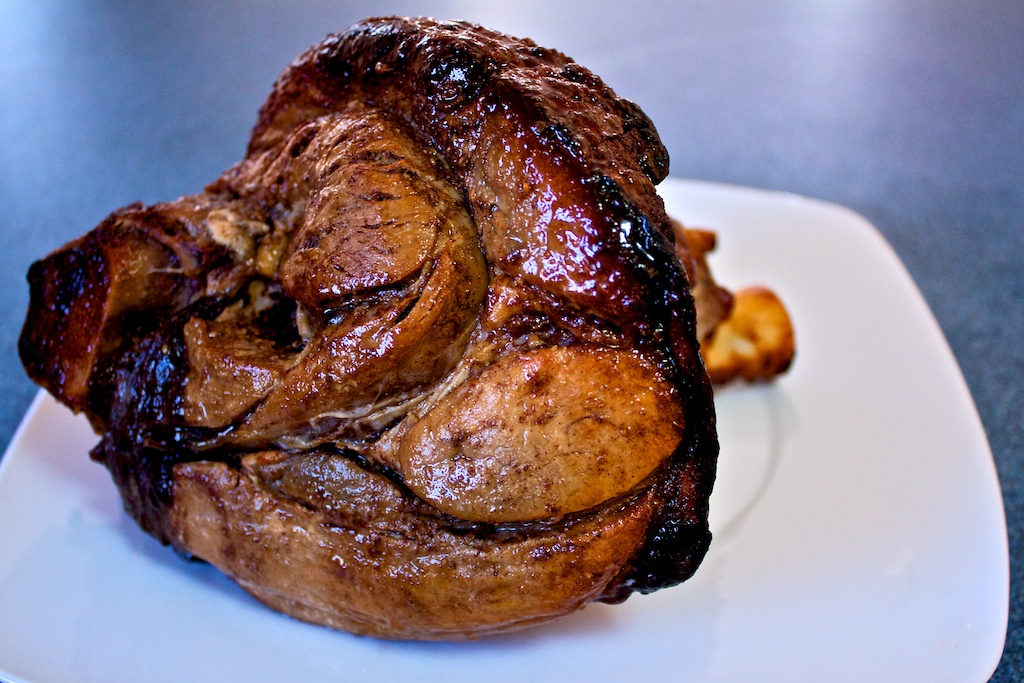
In the fall I purchased a side of pork from my friends at Active Life Farm. I got the belly cured into bacon for me as I don’t have a smoker …. YET … but I took the legs uncured. I thawed a leg out and started researching how I could cure a ham, and the results were spectacular. Thanks to Active Life for making this amazing Berkshire pork available to me, it was the highlight of my Easter Sunday meal.
When curing meats you will need salt and flavor. The salt is used not only to add salty yumminess to the meat but to also allow osmosis to draw in the other flavors and moisture from the liquid. You can be as creative as you want with the curing liquids as long as you remember the salt and sugar are required. Without the salt and sugar to draw the flavor deep inside the meat you will just flavour the outside and that is what the glaze is for.
Here is how I cured my Easter Ham:
Brine:
6 Liters of Water
4 Cups of course salt
2 Cups of demerara sugar
1 Cup of maple sugar (optional – can replace with 1 cup demerara sugar)
1 Stick of cinnamon
6 Whole cloves
5 sage leaves
6 black pepper corns
1.5 tsp red chili flakes
Glaze:
1/2 cup brown sugar
1/2 cup maple syrup
2 Tbsp of Whole Grain Mustard
1 tsp cinnamon
1/4 tsp grated nutmeg
1/2 tsp sage
Combine all ingredients in a large stock pot, bring to a simmer and stir until all of the salt and sugar is done. A number of brine recipes will say you are done at this point but I cover and allow it to steep on low heat for 30 to 40 minutes. I want all of the flavor in the herbs and spices to infuse the liquid. A note on my sugar selections. I wanted to impart subtle flavors to the ham so I chose demerara sugar (a very rich dark brown sugar) and maple sugar. I wanted the various subtle notes from those sugars in the meat. I would use the demerara sugar which is readily available every time, the maple sugar I was able to get a good deal on but if you don’t have an affordable local provider don’t spend a fortune on it, it can be very expensive.
Allow the brine to cool then refrigerate until it is cold. Do NOT put the meat in the brine until it is cold (under 4 degrees C or 40 degrees F). You do not want to have the meat in a warm water, that will encourage bacteria growth and cook the meat. Always brine in cold water.
To prepare the ham for brining, score the skin and fat in a diamond pattern on all sides. Do not cut into the meat but cut through the fat and the skin, this will allow brine penetration.
When the brine is cold, place the meat in it and completely submerge. you can put a couple plates on it to weigh it down. Brine for about 16 hours, no more than 24 hours it will be over salty.
When the ham has been brined remove from the water, discard the brine and rinse the ham off removing the excess salt from the surface of the ham. If you bake it without rinsing you will have a salt crust, the purpose of the salted brine was to draw moisture and flavor into the meat, we will flavor the outside with a glaze.

Place the ham on a roasting rack in a pan and place into a 500 degree oven for 20 minutes. This will sear the outside of the ham locking in the juices and adding flavor. This is done unglazed which is important, if you try to glaze the ham at a high temperature or to early you will burn the sugar.
After 20 minutes reduce the oven to 350 until the internal temperature reaches 145 degrees. This will take about 2 – 3 hours depending on the ham. Temperature is the only true indicator of meat being done. Time is only the roughest of estimates, if you want juicy meats that are safe to eat, use temperature.
After 20 minutes at 350 spread a layer of glaze over the ham, reglaze every 20 minutes until the ham reaches the desired temperature. When you get to 145 remove the ham from the oven and tent in aluminum foil for 30 minutes. The ham will go up about another 10 degrees in temperature, it is still cooking after it come out.
After the meat is rested slice and serve with the remaining glaze to be used as a sauce.
I accompanies the ham with a walnut dressing (walnuts, olive oil, sage, honey and balsalmic with salt and pepper), mashed skin on red potatoes, honey glazed carrots and a gratin of Jerusalem artichokes.
Thanks to all my local suppliers:
Berkshire Pork Leg : Active Life Farms
All vegetables : Tap Root and Noggins Corner
Honey: Cosman and Whidden Honey
Milk: Fox Hill Cheese House
 Tim's Kitchen Table